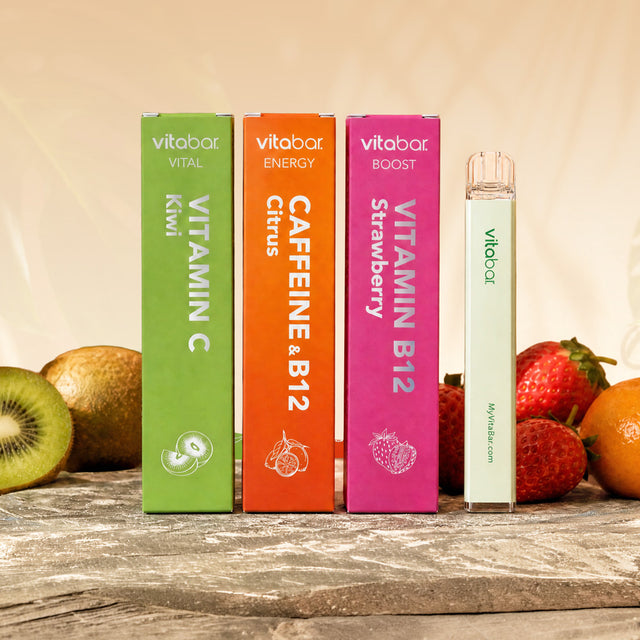
How a VitaBar Actually Works
Each VitaBar device holds a liquid vitamin concentrate that's warmed at a low temperature inside the device. Inhaling activates the mechanism, and you breathe in the resulting infused vapor, similar in motion to a nicotine vape but built around vitamins and botanicals instead. The base liquid is organic vegetable glycerin and propylene glycol, which VitaBar describes as ingredients commonly used to carry flavor in food products. The company states its formulas are made in ISO-certified labs and are free of diacetyl, acetoin, and acetyl propionyl, three compounds that drew safety attention in earlier flavored vaping products. Every device across the entire range is nicotine-free, which is the core distinction VitaBar draws between itself and a traditional vape.
The Two Families of Formulas
VitaBar's energizing side includes ENERGY, built around caffeine in Citrus, Cocoa, and Cinnamon flavors; BOOST, built around vitamin B12 in Berry Mint, Strawberry, and Watermelon; VITAL, built around vitamin C in Kiwi and Mango; BOUNCE BACK, combining green tea and antioxidants; and a Ginseng and Ginger formula in Minty Lime and Mango. The calming side includes SOOTHE, built around melatonin in Peppermint and Lavender; CHILL, built around chamomile in Lavender, Peach, and Lychee; and a GABA and Kava formula in Kumquat. Splitting the lineup this way means a buyer picks a specific use case, a jolt of caffeine, a vitamin C boost, or a melatonin wind-down, rather than one generic all-purpose blend trying to cover every scenario at once.
How Long One Actually Lasts
VitaBar states its devices are rated for roughly 750 to 850 inhalations, which works out to about one to three weeks of regular use depending on how often you reach for one. The SOOTHE melatonin formula tends to stretch longer than that range in practice, since it's typically used once before bed rather than multiple times throughout the day like the energizing formulas. For people who expect to keep using VitaBar regularly, the brand also sells a rechargeable pod system, where you replace a smaller pod refill instead of buying an entirely new device every time the liquid runs out, with the pod refills and the rechargeable kit itself priced and sold separately.
The Absorption Claim, in Plain Terms
VitaBar states that ingredients taken this way may be absorbed nearly immediately through the mucous membranes, rather than passing through the digestive tract the way a gummy or capsule does. The brand presents this as a speed advantage over swallowing a supplement. It's worth being precise about the evidence behind that claim: it's VitaBar's own explanation of how inhaled absorption is understood to work in general, not a result from independent clinical testing specific to VitaBar's own devices. That doesn't make the underlying mechanism implausible, mucous membrane absorption is a real physiological pathway, but the 'near-immediate' framing should be read as the company's explanation rather than a number backed by outside clinical measurement of VitaBar products specifically.
Price and How the Lineup Is Sold
Individual VitaBar devices are priced around $19.99 each, with pod refills at roughly $24.99, and bundles ranging from a 3-pack up to a 10-pack for buyers who want to stock up across flavors or formulas. The rechargeable kit is sold separately at around $29.99. VitaBar advertises free US shipping on orders over $25 and a 30-day satisfaction guarantee covering refunds or replacement, which the brand positions as more generous than competitors in the category that charge restocking fees or cap returns at a shorter window.
Where VitaBar Makes Sense, and Where It Doesn't
VitaBar is a reasonable fit for people who already enjoy the physical ritual of inhaling from a handheld device, whether from a past vaping habit or just liking the motion, and who want a nicotine-free version of that ritual built around vitamins instead. It also suits people looking for a caffeine option that isn't another drink to carry around, or anyone curious about trying melatonin or chamomile in a format other than a pill before bed. It's a weaker fit for anyone looking for a proven substitute for actual vitamin intake through food or standard supplements, since this is a different delivery method rather than a measured dose comparable to a multivitamin. It also won't suit anyone who is simply not comfortable inhaling any aerosolized product, nicotine-free or not, and anyone expecting the absorption claims to be backed by outside clinical data rather than the company's own explanation should treat that specific claim with appropriate caution, since no independent study on VitaBar's own devices was found on the brand's site.
Common questions
Does VitaBar contain nicotine?
No. VitaBar markets its entire line as nicotine-free, built around vitamin and botanical concentrates like B12, vitamin C, melatonin, and chamomile instead of nicotine salts or freebase nicotine.
How long does one VitaBar device last?
VitaBar states its devices are good for roughly 750 to 850 inhalations, which works out to about one to three weeks of regular use. The SOOTHE melatonin formula tends to last longer since it's typically used once at night rather than throughout the day.
What's in the base liquid besides the vitamins?
VitaBar uses organic vegetable glycerin and propylene glycol as the carrier base, both described by the brand as common food-grade ingredients used to carry flavor. The company states its formulas are made in ISO-certified labs and exclude diacetyl, acetoin, and acetyl propionyl.
Is the rechargeable kit worth buying over single-use devices?
If you expect to keep using VitaBar regularly, the rechargeable kit paired with pod refills works out as the more sustainable long-term option, since you replace only the pod rather than the entire device each time.