What's Actually in the Jar
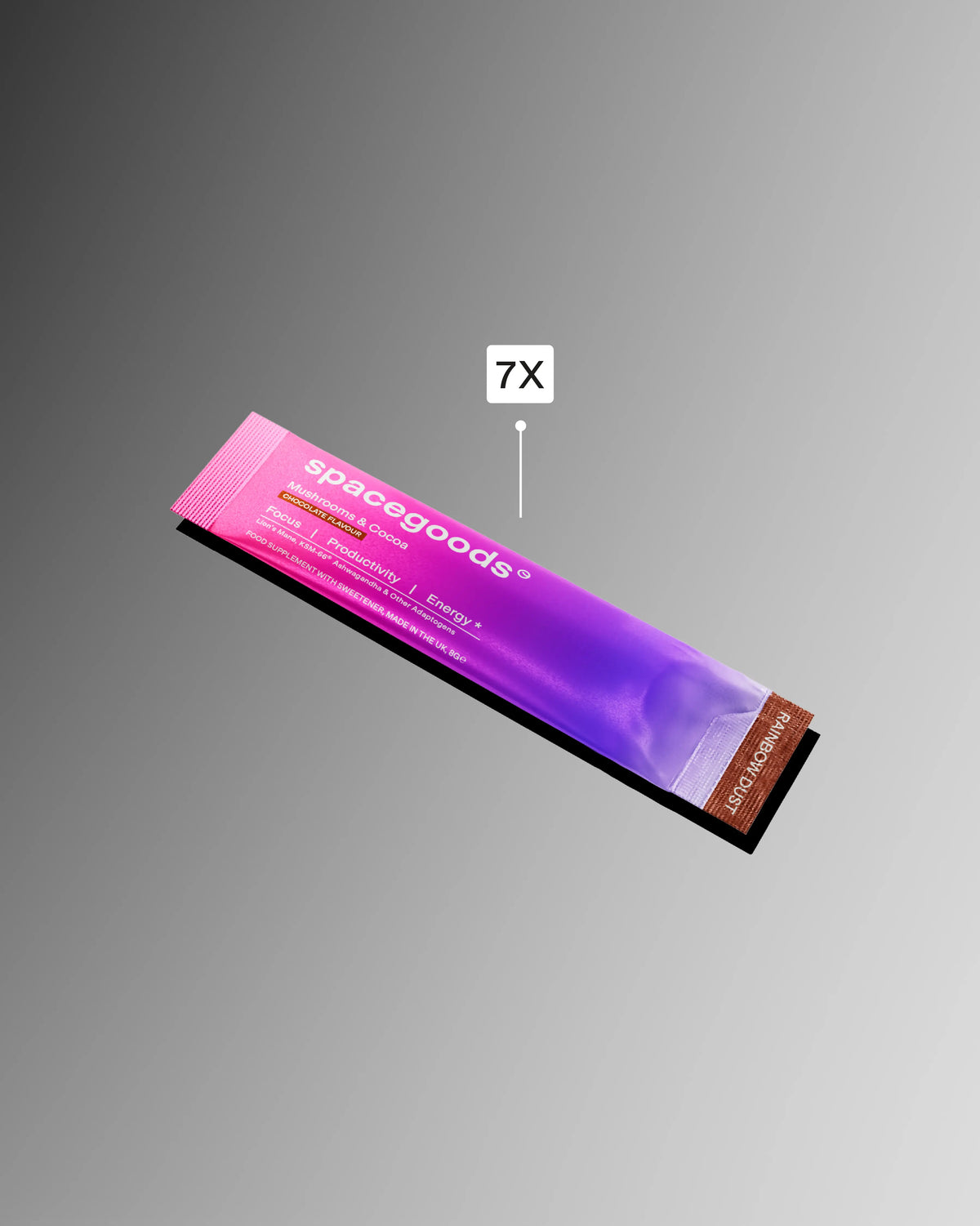
Spacegoods sells six core blends, each built for a different moment in the day rather than one all-purpose powder. Rainbow Dust combines coffee with mushrooms and adaptogens including lion's mane, cordyceps, and KSM-66 ashwagandha, aimed at focus and energy. Astro Dust is the evening formula, built around relaxation and sleep support rather than a stimulant. Hydro Dust is an electrolyte blend for hydration, Glow Dust is positioned as an all-in-one daily formula for energy, immunity, and skin health, and Matcha Dust offers a matcha-based alternative alongside the coffee-based Rainbow Dust. The brand also sells an Oat Mushroom Latte as a ready-to-drink can for people who don't want to measure powder. Everything is sold as single-serve sachets or larger pouches, labeled as a food supplement, and the packaging states the products are made in the UK.
How It Mixes and Tastes
The blends are designed to be stirred into hot water or dairy and plant-based milk, similar to preparing a hot chocolate or a matcha latte rather than brewing coffee. Rainbow Dust comes in flavors like chocolate, where the cacao softens the earthier mushroom undertone that shows up in most functional mushroom products. Because Rainbow Dust still contains coffee as a base ingredient, it is not a caffeine-free product despite being marketed as a coffee alternative; it's closer to a reformulated coffee than a replacement for one. Astro Dust, being the evening blend, is built without that caffeine base, which makes sense given its role in a nighttime routine. The overall texture leans closer to a specialty hot chocolate than a straightforward espresso, which is worth knowing if you're expecting something that tastes like plain instant coffee with extras mixed in.
The Research Spacegoods Points To
Spacegoods cites figures like a 93% improvement in focus and an 88% improvement in energy levels on its marketing pages. It's worth being precise about where those numbers come from: Spacegoods attributes them to its own customer survey, not a peer-reviewed clinical trial published in a journal. That distinction matters. Self-reported satisfaction data from existing buyers tells you something about how people who already bought the product feel afterward, but it isn't the same standard of evidence as a controlled study. The individual ingredients, lion's mane, cordyceps, reishi, and ashwagandha, all have a long history in traditional herbal use and have been the subject of various smaller studies in wellness and nootropic research, but Spacegoods' own marketing numbers specifically should be read as the brand's internal survey results rather than independent scientific proof of what the blends do for any individual buyer.
Where You Can Buy It and What It Costs
Spacegoods sells starter kits and sample packs beginning around £14 for smaller formats, with ready-to-drink Oat Mushroom Latte cans priced separately from the powder sachets. Beyond its own website, the brand has built a retail footprint of more than 1,500 stores across the UK, including Boots and Holland & Barrett, which means UK shoppers can pick up a single sachet in person before deciding whether to commit to a full pouch online. For buyers outside the UK, the brand's own website is the more practical option, since that retail presence is concentrated domestically rather than internationally, and shipping availability and cost should be checked directly before ordering.
Who This Is Actually Good For
Spacegoods makes the most sense for people who already drink something hot every morning and want to add functional mushrooms and adaptogens into that existing habit rather than starting a completely new supplement routine. It also suits people who enjoy the ritual of mixing and drinking something warm, as opposed to swallowing capsules, and who are specifically curious about ingredients like lion's mane or ashwagandha but would rather try them in a flavored drink than a plain extract. The range of six blends targeting different times of day also appeals to people who want a single brand to cover mornings, workouts, and evenings rather than buying separate products from separate companies for each.
Where Spacegoods Falls Short
The mushroom-and-cacao flavor profile is distinct, and it won't suit everyone who's used to the straightforward taste of plain coffee or tea; this is a love-it-or-find-it-odd category of product by nature. Rainbow Dust still containing caffeine means it isn't a true stimulant-free swap, despite sitting in the 'coffee alternative' part of the market, so caffeine-sensitive buyers should check the specific blend rather than assume the whole range is stimulant-free. Buying individual sachets instead of committing to a larger pouch or a subscription also pushes the cost per serving noticeably higher than a jar of instant coffee. And as with any food supplement, Spacegoods' products are not evaluated as medicine by a regulator and are not meant to replace medical treatment or professional advice for any health condition.
Common questions
Does Spacegoods contain caffeine?
Yes, in the Rainbow Dust blend, which is built around coffee combined with mushrooms and adaptogens. Astro Dust, the evening formula, is designed without that added caffeine, since it's meant to support winding down rather than focus.
Can Spacegoods be mixed with milk instead of water?
Spacegoods markets several of its blends, including Rainbow Dust and Matcha Dust, as working with dairy or plant-based milk for a creamier result, similar to preparing a latte. Hot water is the simpler default if you want a thinner drink.
Is the 93% focus improvement figure from a clinical study?
No. Spacegoods attributes that number, along with an 88% energy improvement figure, to its own customer survey rather than a peer-reviewed clinical trial. Treat it as self-reported satisfaction data from existing buyers, not independent scientific proof.
Where can I buy Spacegoods outside the UK?
Spacegoods sells directly through its own website, which is the most practical option for international shoppers, since its retail footprint of more than 1,500 stores is concentrated in the UK, including chains like Boots and Holland & Barrett.