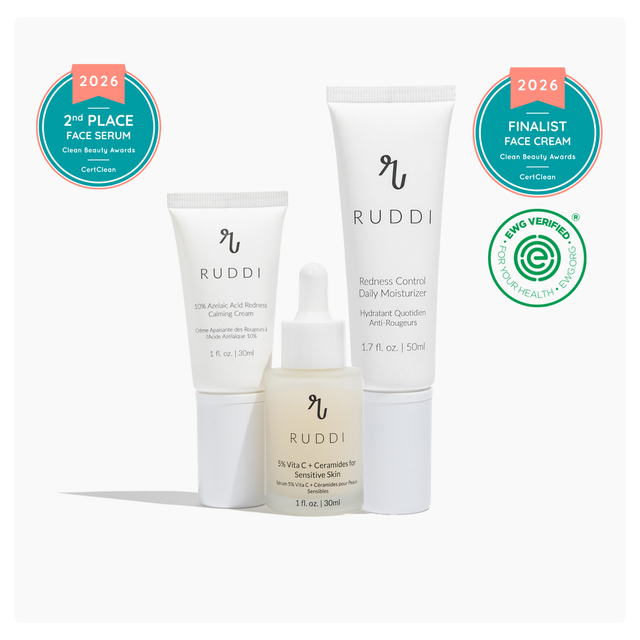
What Problem Does Ruddi Solve
Ruddi addresses a core frustration for people with inflammatory skin conditions: the choice between gentle products that don't work and effective ones that cause redness, irritation, and flare-ups. Co-founder Kristina watched her mother cycle through products for rosacea, settling on basic moisturizers that didn't burn rather than actually healing the skin. Years later, facing type 1 rosacea herself, Kristina rejected the narrative that inflammatory skin conditions can only be managed, not fixed. She spent two years studying skin inflammation and discovered that rosacea, eczema, dermatitis, and acne aren't random—they're immune responses usually driven by multiple underlying issues. That research became the foundation of Ruddi Skincare. The brand believes everyone deserves to feel confident in their skin, which is why every formula targets the root causes of inflammation rather than just masking symptoms. If you've been told to accept your inflammatory skin condition as permanent, Ruddi's approach offers an alternative: formulas designed specifically for sensitive, reactive skin.
How Ruddi's Range Is Organized
Ruddi's product lineup is compact and focused. Currently, the brand offers a single moisturizer alongside other targeted treatments, with prices ranging from USD 30 to USD 220 across their full product selection. This narrow range reflects Ruddi's philosophy: rather than overwhelming customers with dozens of options, the brand concentrates on formulating solutions that work together to support skin health. The moisturizer serves as a core product, likely designed to strengthen the skin barrier and support microbiome balance—the two pillars of Ruddi's approach. The wider price range suggests the brand also offers specialty treatments or multi-step systems for different severity levels of inflammatory conditions. This curated approach means shoppers aren't paying for marketing excess; they're investing in products built from two years of research into what actually calms inflamed skin.
Is Ruddi Worth the Investment
Ruddi positions itself as a science-backed alternative to conventional skincare, and the pricing reflects that positioning. At USD 30 to USD 220, the brand sits in the mid-to-premium range, which is reasonable for targeted, research-driven formulas. What sets Ruddi apart is specificity: these products aren't generic moisturizers or serums—they're built for a distinct problem (inflammatory skin conditions) based on real research into immune response and barrier function. The brand's origin story also matters. Ruddi wasn't created by a celebrity or marketing team; it came from one person's personal struggle and years of independent study. That foundation suggests the formulas prioritize efficacy over trend-chasing. For shoppers tired of products that either don't work or trigger their skin, Ruddi's focused range and inflammatory-specific approach offer a genuinely different option. If your skin reacts to most products, the research-backed formulation justifies the price.
Common questions
What skin conditions does Ruddi Skincare target?
Ruddi specifically addresses rosacea, eczema, dermatitis, and acne by treating them as immune responses rather than random skin issues. The brand's formulas support the skin barrier and microbiome to reduce inflammation and prevent flare-ups.
Why did the founder create Ruddi Skincare?
Co-founder Kristina developed Ruddi after watching her mother struggle with rosacea and later facing type 1 rosacea herself. She spent two years researching skin inflammation and learned that most products force a choice between gentle and effective—Ruddi was built to offer both.